
Bear Class (Year 6) 2026 - 2027
Dear Parents and Carers,
Welcome to the class page for Bear Class.
Class Staff
Teacher: Mr Dunning
Teaching Assistant: Mrs Cavanagh
Here you will find all of the exciting and wonderful things that your child will be learning during their time in Year 6. If you have any questions, please use Class Dojo or speak to a member of our team at drop off/ pick up.
Thank you
Summer 2 - Hansel & Gretel by Neil Gaiman

In English this half term, we will be looking at the book 'Hansel & Gretel' by Neil Gaiman
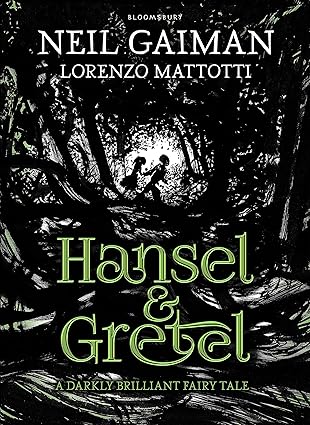
Curriculum Overview: Hansel & Gretel
Neil Gaiman's Hansel & Gretel is a beautifully retold version of the classic fairy tale originally collected by the Brothers Grimm. Set during a time of famine, the story follows Hansel and Gretel, a brother and sister who are abandoned in the forest and must rely on their courage and cleverness to survive. Their journey leads them to a mysterious house made of sweets, where they encounter a dangerous witch with sinister plans.
Gaiman's adaptation stays true to the dark atmosphere of the original tale while using vivid, engaging language to bring the story to life for modern readers. Themes of bravery, family, survival, and resilience run throughout the book, encouraging readers to think about how people overcome challenges and make difficult choices.
This text provides an excellent opportunity for students to explore traditional fairy tales, analyse character development, and discuss the moral lessons that stories can teach. The rich imagery and suspenseful narrative make Hansel & Gretel an enjoyable and thought-provoking read for young audiences.

In Reading, the children will explore multiple texts as we explore a new text and genre each week.
We will be using our different VIPERS skills: Vocabulary, Infer, Predict, Explain, Retrieve and Summarise to improve our understanding of what we read.'

'Reading for Pleasure' has great amounts of benefits for your child. In Year 6, we ensure your child has time to read for pleasure and each day, we set time aside to read our class book for pleasure.
Benefits of 'reading for pleasure':
Inspires imagination and creativity.
Enrinches cultural awareness and understanding.
Increases empathy and improves relationships with others.
Lifts well-being levels and improves mood.
Improves progress in vocabulary, spelllings and even maths.
Encourages children to take a screen break.
Read with your child every day even if it is just 2 minutes- this can make all the difference.
Record in their reading diaries to ensure that your child is receiving their stamp for their book from the vending machine, or reading buddy.

You could ask your child about what they think might happen next in the story, how do they think the character is feeling, who is the author and what do they do.
 |
 |
 |

Now that SATs have finished, our Year 6 pupils will be taking part in a range of exciting mathematical projects designed to apply their learning in real-life contexts. These activities will encourage problem-solving, teamwork, creativity and reasoning, while continuing to develop key mathematical skills in an engaging and enjoyable way.
Theme Park Maths
In this project, pupils will become theme park designers and managers. They will use mathematics to plan attractions, create scaled maps, calculate costs and budgets, analyse visitor data, and make decisions about pricing and profitability. This project provides opportunities to apply skills in measurement, geometry, statistics and financial mathematics.
White Rose Bakery
The White Rose Bakery project allows pupils to explore mathematics through the world of baking and business. Children will work with recipes, scale ingredients, calculate costs and profits, and investigate measures and ratios. They will use their mathematical knowledge to solve practical problems while developing an understanding of how maths is used in everyday life.
White Rose Tours
Through the White Rose Tours project, pupils will become travel planners, using mathematics to organise and cost holidays and excursions. They will calculate distances, travel times, budgets and currency conversions, as well as compare different travel options. This project helps children see how mathematics plays a vital role in planning and decision-making in the real world.
White Rose Futures
White Rose Futures encourages pupils to think about their aspirations and the opportunities that lie ahead. Using mathematical skills, children will explore topics such as salaries, budgeting, savings and financial planning. They will investigate how maths is used in a wide range of careers and gain a greater understanding of the importance of financial literacy in everyday life.
These projects provide a valuable opportunity for pupils to consolidate the skills they have developed throughout primary school while enjoying collaborative, hands-on learning experiences. By applying their learning to meaningful and engaging contexts, pupils will continue to develop confidence, independence and a positive attitude towards mathematics as they prepare for the next stage of their education.
Children will have ongoing access to their TT Rockstars logins at home. I will set your child specific times tables for them to practice. Please ensure that your child is practising them at home as it is very beneficial for their learning.
If you have misplaced your child's login, please drop me a message on Dojo and I will resend for you.

This half term, Year 6 will be studying Light, while also consolidating key scientific knowledge and skills from across the year in preparation for their transition to secondary school.
During our Light topic, pupils will explore how light travels and how it enables us to see objects. They will investigate the way light travels in straight lines and use this understanding to explain phenomena such as shadows, reflections and how light is reflected into our eyes. Children will also learn how the size and shape of shadows can change and use scientific evidence to support their explanations.
Throughout the unit, pupils will develop their working scientifically skills by planning investigations, making careful observations, recording results and drawing conclusions from evidence.
Children will learn to:
- Recognise that light appears to travel in straight lines.
- Explain that we see things because light travels from light sources to our eyes, or from light sources to objects and then to our eyes.
- Use the idea that light travels in straight lines to explain why shadows have the same shape as the objects that cast them.
- Investigate how shadows change in size and position.
- Use scientific vocabulary accurately when discussing their findings.
Consolidation of Previous Learning
Alongside the Light unit, pupils will revisit and strengthen their understanding of key scientific concepts studied throughout Year 6. This will include opportunities to review prior learning, apply scientific knowledge in different contexts and practise enquiry skills to ensure they are secure in their understanding before the end of the academic year.
We look forward to an exciting final term of scientific discovery and investigation.

This term, Year 6 will be exploring two fascinating societies from the past: the ancient Maya Civilization and the Anglo-Saxons. Through historical enquiry, children will compare and contrast how these civilisations lived, governed themselves, worshipped, traded, and influenced the world around them.
What will the children learn?
Pupils will investigate:
- When and where the Maya and Anglo-Saxons lived.
- The structure of their societies and who held power.
- Daily life, including homes, food, clothing, and occupations.
- Religious beliefs and places of worship.
- Achievements in art, architecture, science, and technology.
- How historians use evidence to learn about the past.
- Similarities and differences between the two civilisations.
Key Questions
- What was life like for the Maya and the Anglo-Saxons?
- How were their societies organised?
- What did they believe, and how did religion influence daily life?
- What achievements and innovations are they remembered for?
- In what ways were these civilisations similar and different?
Skills We Will Develop
Children will:
- Analyse and interpret historical sources.
- Ask and answer questions about the past.
- Compare and contrast different societies.
- Draw conclusions using evidence.
- Present their findings through discussion, writing, and creative projects.
Vocabulary
Civilisation, hierarchy, kingdom, ruler, trade, settlement, agriculture, archaeology, artefact, religion, culture, legacy, comparison, evidence.
End of Unit Outcome
By the end of the unit, pupils will use their historical knowledge to create a comparison of the Maya Civilisation and the Anglo-Saxons, explaining key similarities and differences and evaluating the impact each civilisation has had on history.
We are looking forward to discovering how two very different societies developed, thrived, and left lasting legacies that can still be seen today.
What will the children learn?
Pupils will investigate:
- When and where the Maya and Anglo-Saxons lived.
- The structure of their societies and who held power.
- Daily life, including homes, food, clothing, and occupations.
- Religious beliefs and places of worship.
- Achievements in art, architecture, science, and technology.
- How historians use evidence to learn about the past.
- Similarities and differences between the two civilisations.
Key Questions
- What was life like for the Maya and the Anglo-Saxons?
- How were their societies organised?
- What did they believe, and how did religion influence daily life?
- What achievements and innovations are they remembered for?
- In what ways were these civilisations similar and different?
Skills We Will Develop
Children will:
- Analyse and interpret historical sources.
- Ask and answer questions about the past.
- Compare and contrast different societies.
- Draw conclusions using evidence.
- Present their findings through discussion, writing, and creative projects.
Vocabulary
Civilisation, hierarchy, kingdom, ruler, trade, settlement, agriculture, archaeology, artefact, religion, culture, legacy, comparison, evidence.
End of Unit Outcome
By the end of the unit, pupils will use their historical knowledge to create a comparison of the Maya Civilisation and the Anglo-Saxons, explaining key similarities and differences and evaluating the impact each civilisation has had on history.
We are looking forward to discovering how two very different societies developed, thrived, and left lasting legacies that can still be seen today.

Your child will have 2 PE lessons each week. Their days this half term are Wedesnday and Thursday. Swimming will be continuing ona Wednesday and we will be participating in track and field events in Athletics ready for Sports Day and Winsford Town Sports.


We are delighted to announce that our Year 6 children will be performing Annie Jr. as their end-of-year production. Over the coming weeks, pupils will be working hard to learn their lines, songs and choreography as they bring this much-loved musical to life. Through rehearsals, the children will develop their confidence, teamwork and performance skills while having lots of fun preparing for the show. We look forward to welcoming families and friends to enjoy what promises to be a fantastic celebration of our Year 6 pupils' talents and achievements.
Other useful links:
Please see below links to useful websites for your child to use when they are at home. I will be adding to the list throughout the course of the year so please make sure you check for updated links.
Oxford Owl - Linked to our phonics Read, Write Inc programme https://home.oxfordowl.co.uk/reading/free-ebooks/
Story Nory - A range of stories by classic authors as well as poems musicals and fairytales. https://www.storynory.com/archives/classic-authors
Story Berries- Read along with audio clips. https://www.storyberries.com
Monkey Pen- Free downloadable children’s books in PDF format. https://monkeypen.com/pages/free-childrens-books
Free Children’s Stories- https://www.freechildrenstories.com
Keeping Safe Online- www.esafety.gov.au/kids
Topmarks- A great way for children to practise many of their maths skills https://www.topmarks.co.uk/Search.aspx?Subject=16&AgeGroup=3
Newsround is a very good outlet for your child to watch each day to gain a wider understanding of what is happening not only in our country, but the rest of the world. We will be watching newsround every afternoon in class.